Background
Dancing Plague
DaViD-19 was conceived of during the real-world pandemic in 2020, and the references to that time are obvious. But it also takes inspiration from a recurring historical phenomenon called
dancing mania, or
dancing plague, which bubbled up multiple times in Europe up through the 17th century. In some cases dancing presented as a symptom; in others it was considered to be an effective remedy for an otherwise fatal illness. One instance of this was in southern Italy, where a condition called
tarantism (believed to be contracted from the bite of a spider) presented itself in people who engaged in prescribed, frenzied dancing to prevent death, which supposedly gave rise to the style of music and dance now known as the
tarantella.
Crafting the Music and the Dance
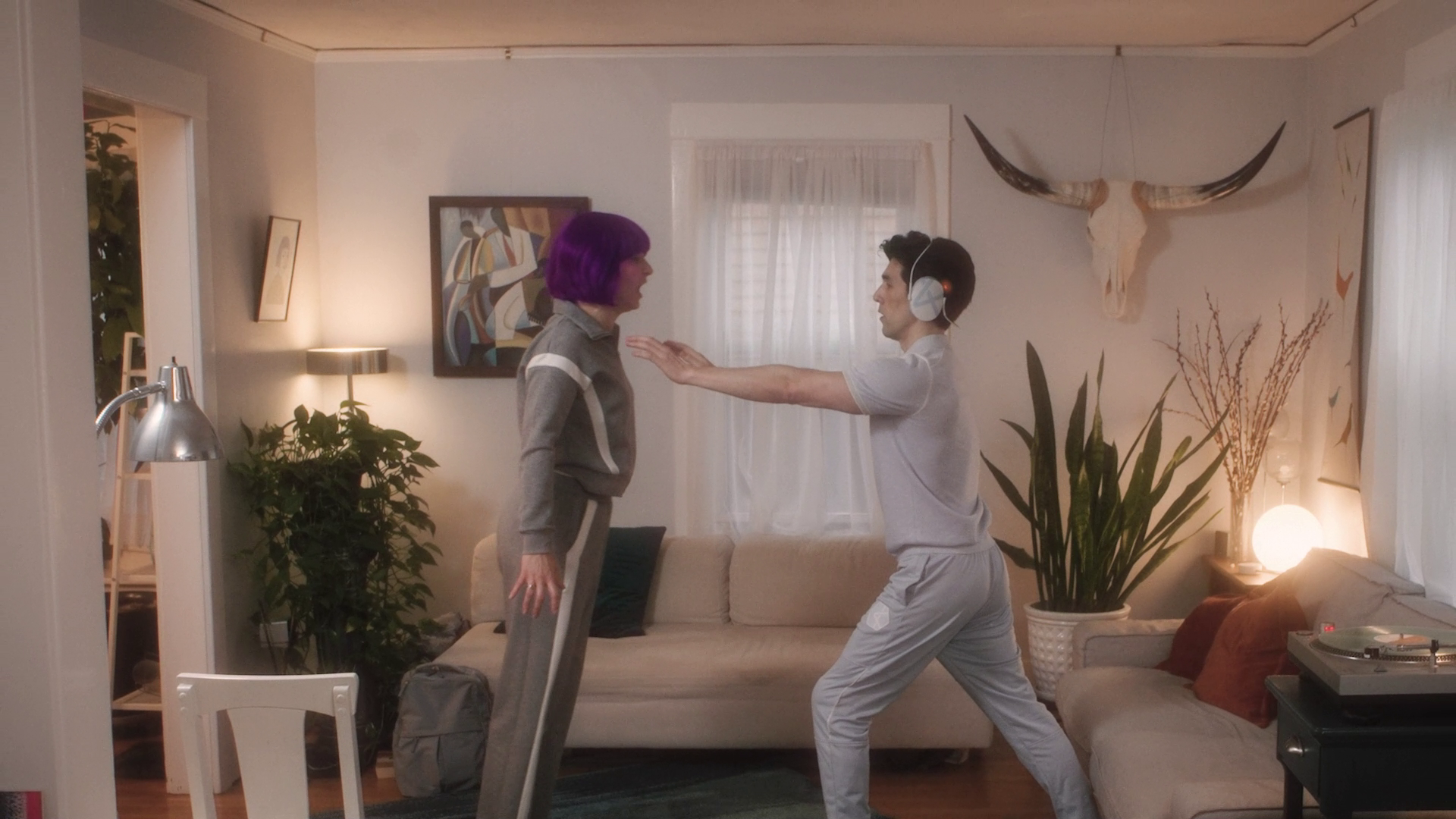
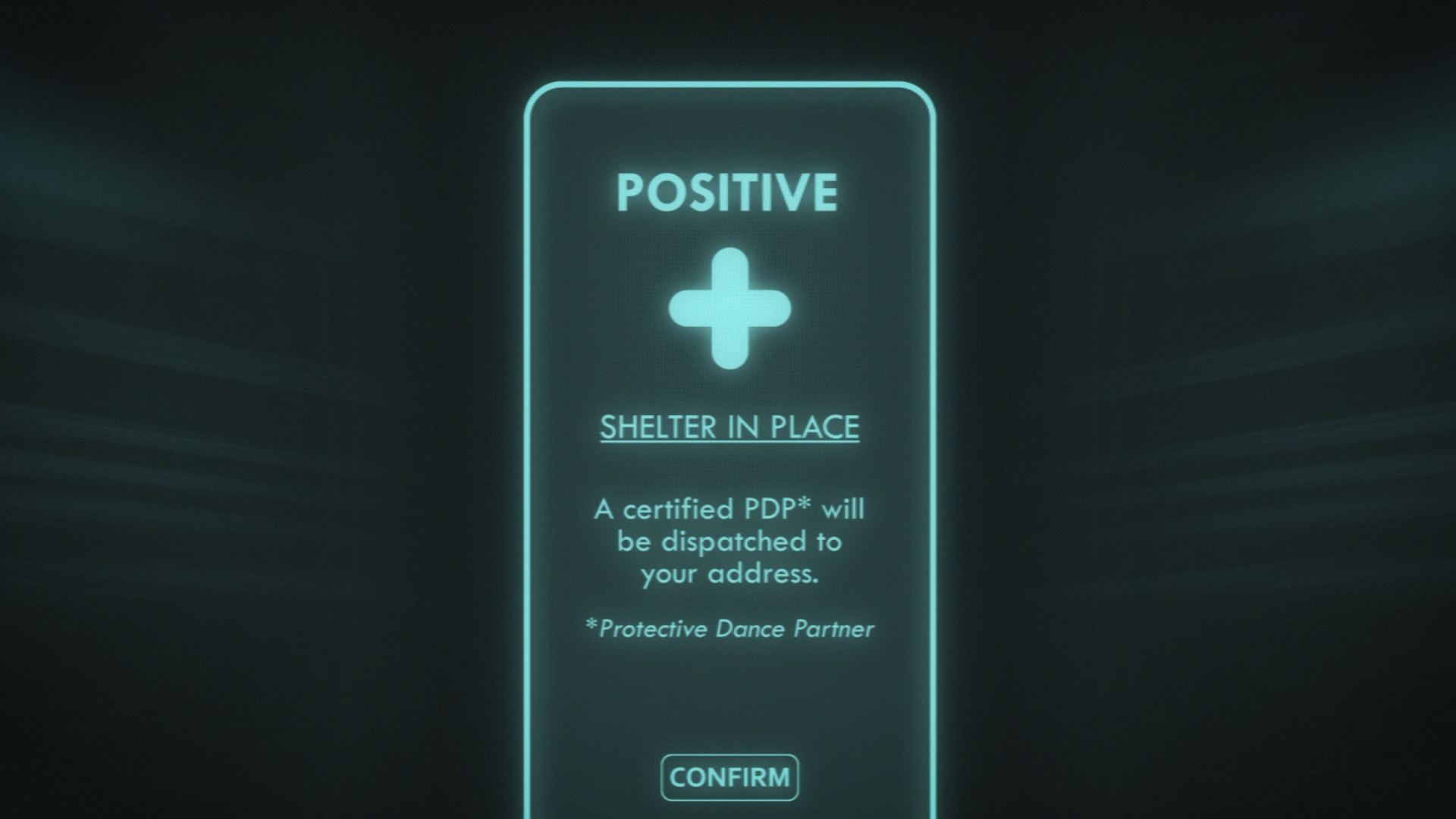
The Dance Virus music that plagues Michael in the film was composed by Masa Gibson in the style of the tarantella as a nod to that historical reference. As the film was developed during full lockdown, the music was expertly performed and recorded remotely by oboist Stuart Breczinski and percussionist Dan Caruso. Dancer/choreographer Isabelle Edgar was then commissioned to choreograph the dance, which she patiently taught to the untrained actors over the course of months via prerecorded tutorial videos and live Zoom rehearsals.
ASL
In the alternate world of the story, Deaf people are presumably immune to the virus, and hearing people have begun to pick up some basic ASL signs in order to communicate non-vocally. The production consulted with native ASL signer Maryjean "Mj" Shahen to make sure the minimal ASL used in the film by the hearing characters made sense in the context of the story (with one character being a more experienced signer than the other). In the opening scene, the character Michael comes across a social media post that teaches how to sign "thank you" in ASL (which she then puts to use at the end of the film); the content of the post was contributed by real-life content creator @theaslshop (which is a fabulous resource for anyone looking to learn ASL!)
Another Era
The film ended up shelved for several years as life (and other projects) got in the way, but it was picked back up all these years later and shot (co-directed by David Kossack) through a more retrospective lens, which also informed the retro aesthetic of its production design and soundtrack. Singer/actor Ria Burns-Wilder lent her sensitive voice to the soundtrack as a counterpoint to the virus music (and also appears in a cameo role as another PDP in the closing credits).
Starring: Abby J. Smith & Masa Gibson
Written by: Masa Gibson
Directed by: Masa Gibson & David Kossack
| Year | Event | Status/Award |
|---|---|---|
| 2026 | Empire State Film Festival | Official Selection |
| 2026 | New York Shorts International Film Festival | Official Selection |
| 2026 | Autumn's Dawn Film Festival | Official Selection |